Florida is one of the most diverse freshwater fishing states in the country—and it’s also DeLong’s top-performing state for a reason: heavy vegetation, shallow cover, warm-water fish activity, and year-round multi-species opportunities create the perfect environment for DeLong’s classic soft-plastic presentations.
Florida fisheries commonly feature hydrilla, eelgrass, pondweed, maidencane, and water lilies/lily pads in lakes, marshes, ponds, and canals—exactly the kind of cover that rewards weedless, slow-worked soft plastics.
What Makes Florida Different
Florida fishing is often about cover, heat, and ambush.
- Vegetation dominates: Pads, hydrilla mats, and canal-edge weeds are everyday structure—not “special spots.”
- Water color varies: Many Florida systems are stained or tannic, and color choice matters because visibility and contrast matter.
- Bites can be seasonal and temperature-driven: Florida bass activity around shallow cover is closely tied to warming water, and 65–70°F is a major “switch-on” range for spring behavior (including bedding activity).
Florida’s Big Bass Vegetation Game
Florida trophy bass opportunities are built around thick cover:
- Lily pads and hydrilla edges
- Weedlines and shallow flats
- Canal systems (especially in the south)
- Marshy transitions and pad fields
These are classic ambush environments—fish don’t always chase far; they react when something moves naturally through their strike lanes.
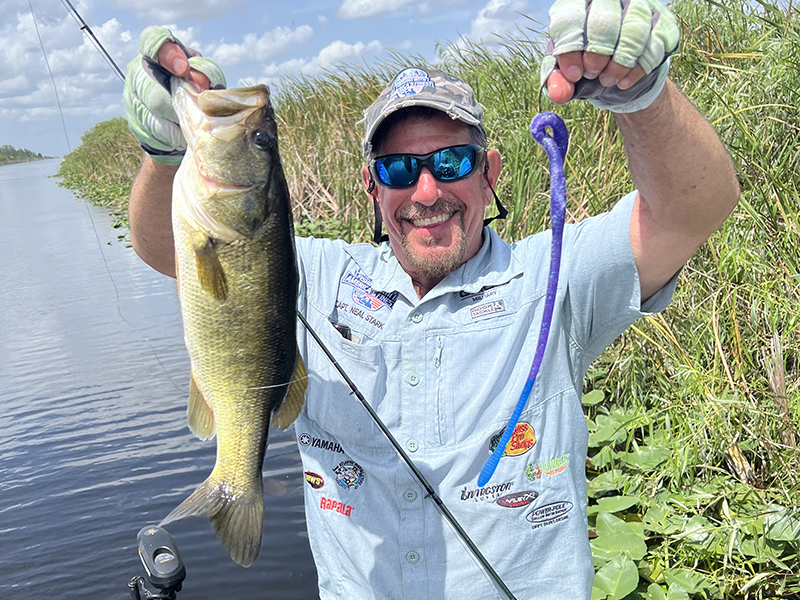
The Florida Workhorse: The DeLong 16″ Snake
In Florida, the 16″ Snake is the top big bass bait—especially once the water warms.
When it shines
- The Snake is at its best when water temperatures get above ~65°F, and it becomes a dominant producer through the warm season (with the strongest window typically April through August based on your real-world reports).
- This lines up well with Florida’s broader warm-water bass behavior patterns, where the 65–70°F range is a major trigger for shallow activity.
Where it’s used in Florida
- Weeds and lily pads statewide
- Everglades canal systems and southern canal networks
- Pad fields where fish pin bait and explode upward
Vegetation patterns like pads and hydrilla are a Florida staple, and they create predictable ambush routes.
How Florida anglers fish it
- Slow, with slight jerks to make it track like a real snake
- Worked along pad edges and weeds
- Pulled across lily pads for violent surface strikes
Florida is a “cover-first” state, and this presentation matches how bass actually feed around pads and mats.
Florida Color Choices That Consistently Produce
Florida color confidence matters because much of the state’s fishing happens in stained, tannic, or vegetation-shadowed water.
Based on Florida angler experience using DeLong lures:
- Junebug-based colors are consistent producers
- Blue-based colors are strong in Florida
- Dirty Watermelon is a proven Florida-specific staple
There’s a good reason Junebug is so well-loved across Florida-style stained water: anglers often describe it as a “go-to” in tannic systems because it shows up naturally while still providing contrast.
South Florida: Year-Round Action With the DeLong Mayfly
South Florida is unique because it offers high-density, year-round multi-species fishing—especially in canals, ponds, and managed waters.
The DeLong Mayfly (pre-rigged) is a strong seller in Florida because it’s:
- Ready to fish
- Easy for anglers to present correctly
- Effective across a wide range of species
What it’s best for in Florida
Based on your on-the-ground feedback, Florida anglers lean on Mayflies year-round for:
- Cichlids
- Panfish
- Canal/pond fish that feed aggressively in warm water
South Florida is also known for strong exotic species fishing, including Mayan cichlids in multiple counties and waterway types, which supports the “multi-species, year-round” reality anglers experience.
(And just to keep expectations accurate: your reports indicate Mayflies are less of a “primary bass tool” in Florida compared to their role for cichlids/panfish.)
Florida Pond Fishing: Where the Bass Witch, Squirm, Twister Tail, and Twister Tad Shine
Florida ponds are their own world: warm water, pressured fish, weed edges, and short feeding windows. That’s why reliable, easy-to-present plastics win.
Based on what you’ve seen from Florida anglers:
- Bass Witch is a strong pond bass producer
- Squirm, Twister Tail, and Twister Tad are becoming increasingly popular in Florida because they simply keep catching fish
- These baits excel when fished around:
- Bank grass and reeds
- Dock edges
- Canal cuts
- Pad points and weed clumps
Florida’s vegetation-heavy habitat types make these presentations practical and repeatable.
A Note on Florida’s “Anything Can Bite” Reality
Florida isn’t just bass water. Many systems have:
- Panfish opportunities
- Exotic species opportunities
- Aggressive feeders that live in canals and ponds year-round
That’s part of why Florida responds so well to DeLong’s style of bait: when fish live in cover and strike fast, durable, weed-friendly soft plastics get more chances in front of them.
Internal Links