
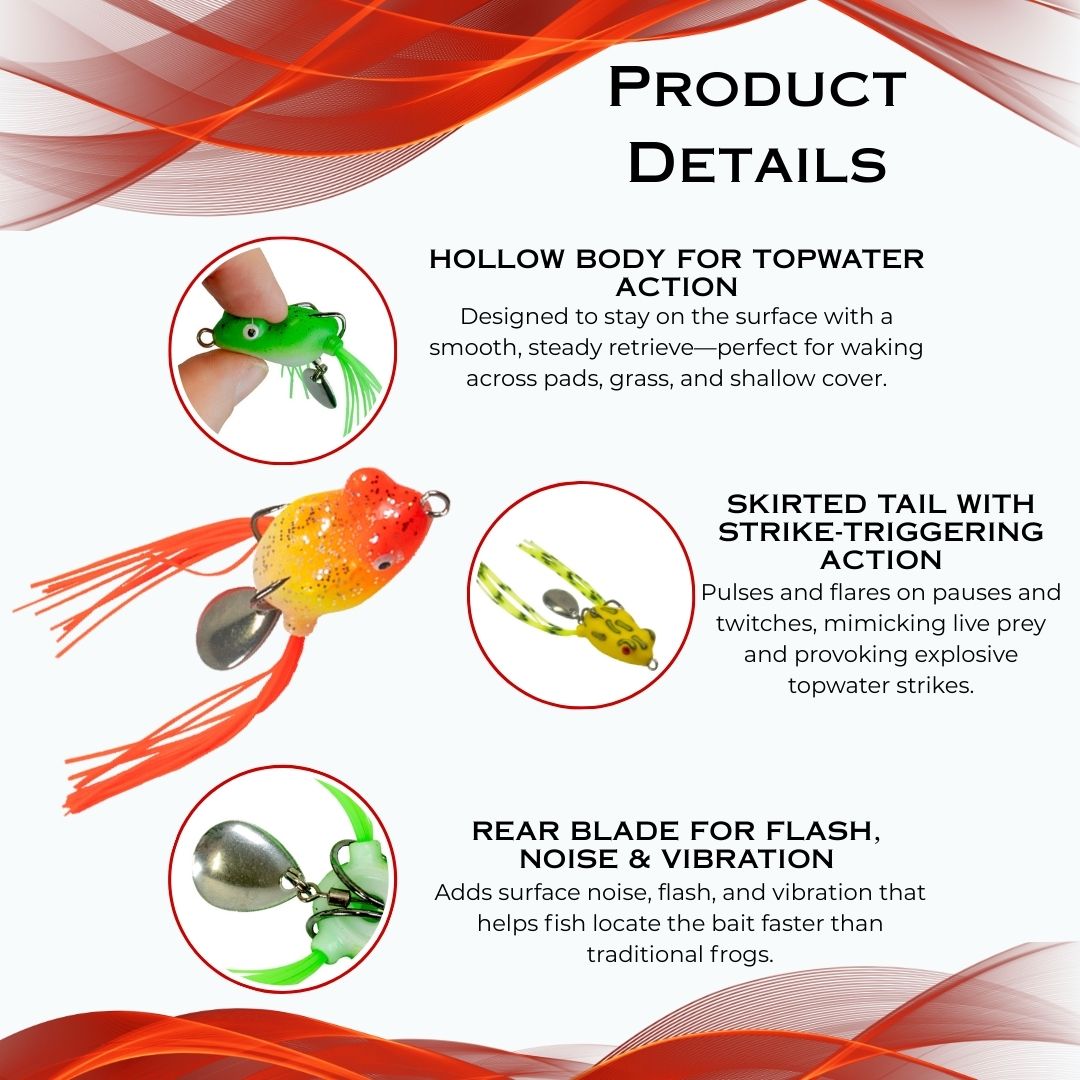
Topwater frog fishing is one of the most exciting ways to catch bass. When conditions are right, frogs can trigger violent strikes in places other lures simply can’t reach.
This guide explains how to fish topwater frogs effectively, including when to use them, where they work best, and how different frog styles change your presentation.
A topwater frog is a surface lure designed to imitate a real frog swimming or struggling on top of the water. With hooks positioned upward, frogs are built to move through heavy cover like weeds, grass, and lily pads without snagging.
They are especially effective when bass are feeding shallow or holding tight to cover.
Topwater frogs work best when bass are willing to move up to strike.
Prime conditions include:
Frogs shine during late spring through early fall, especially when other topwater baits struggle in thick cover.
Frogs are designed for places most lures can’t go.
Key areas to target:
Because frogs are weedless, they allow anglers to fish confidently in areas that would snag other topwater lures.
Not all frogs fish the same. Understanding the differences helps you choose the right tool.
Frog retrieves should match fish mood and conditions.
One of the most common frog fishing mistakes is setting the hook too early.
Key tip:
Wait until you feel the weight of the fish before setting the hook. Bass often strike frogs aggressively but may miss on the first attempt.
A short pause leads to better hookups.
Topwater frogs excel when:
They are less effective during cold fronts or when bass are deep and inactive.
Frogs are at their best when fished where other baits fail.
Topwater frogs remain one of the most effective tools for fishing heavy cover. By understanding frog styles, retrieves, and conditions, anglers can turn missed opportunities into explosive strikes.
When bass are shallow and the cover is thick, few baits are more reliable than a properly fished frog.